The history of Lindt & Sprüngli

In 2025, Lindt & Sprüngli celebrated its 180th anniversary. From its origins in Switzerland, the company has expanded to Europe, North America, and beyond. Discover the captivating story of Lindt & Sprüngli and be enchanted by its legendary products and innovations.

180 years of enchanting the world with chocolate

In the mid-19th century, a remarkable story began to unfold in a small confectionery shop in Zurich – one that would shape the future of chocolate. This was the opening chapter of the story of Lindt & Sprüngli, now a synonym for premium chocolate worldwide.

Since 1845, Lindt & Sprüngli has passionately pursued its purpose: to enchant the world with chocolate. This commitment has brought consumers moments of pure bliss, as well as traditions to treasure. People and their creativity have always been vital ingredients of our company’s success. From the dedication of countless employees to groundbreaking inventions like Rodolphe Lindt’s revolutionary conching process that unlocked the secret of smooth melting chocolate, our story has many heroes.

Iconic products have also played a leading role, such as the beloved Gold Bunny, given as a gift around the world at Easter, our fine Lindt Excellence dark chocolate, and the irresistibly smooth Lindor truffles. Lindt & Sprüngli has grown into a world-renowned chocolate producer, with a rich heritage which has laid strong foundations for many more exquisite premium chocolate moments to come.

Milestones in the history of Lindt & Sprüngli

1845

Early success

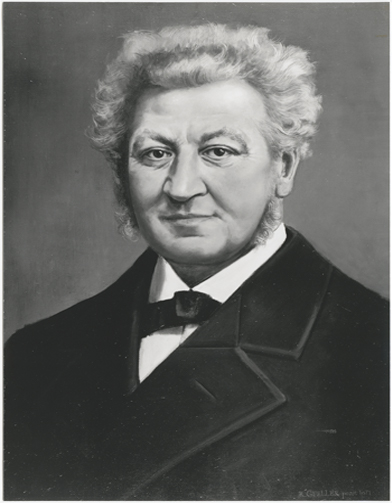
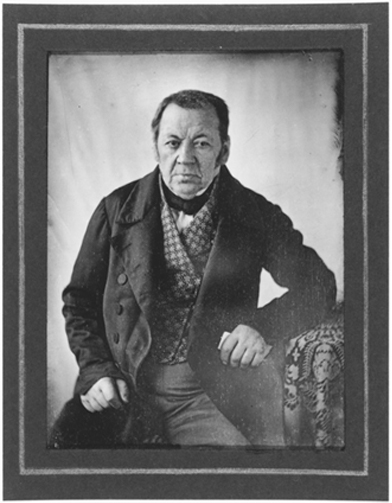
It all began when David Sprüngli opened a small confectionery shop in Zurich’s old town. Together with his son Rudolf, they produced the first solid bar of chocolate in the German-speaking part of Switzerland. The product was an instant success.

1847

First chocolate factory

The chocolate bars – while being very different to what we know today – flew off the shelves of their shop. The father and son duo soon recognized that they needed more room to make their chocolate. Therefore, the Schleifetobel factory in Horgen opened in 1847.

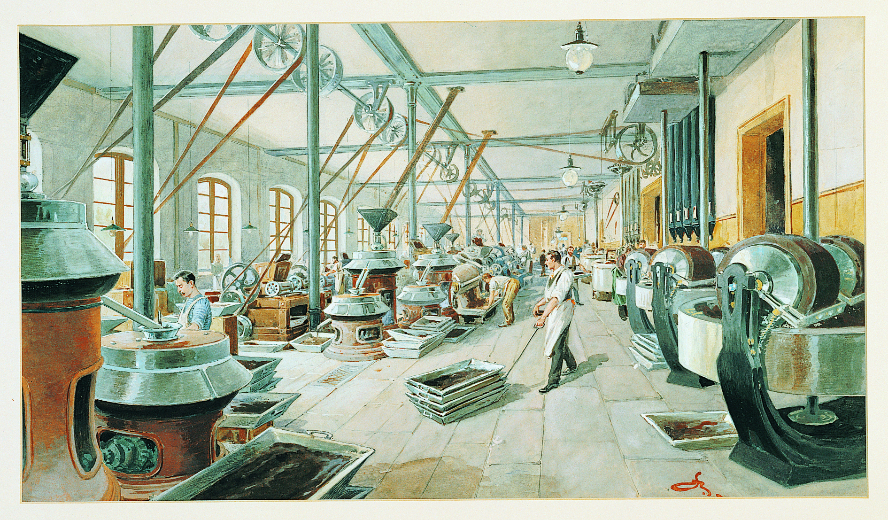
Lindt & Sprüngli Factory

1859

New confectionery shop

David Sprüngli expanded his business and started to make a name for himself. He opened a second confectionery shop on Paradeplatz in Zurich – the famous Confiserie Sprüngli that is still there to this day.

1870

Expansion of factory

In 1870, Rudolf Sprüngli, who had been the sole head of the company since 1862, bought the Werdmühle factory and gradually replaced the facilities in Horgen, which had become too small.

1879

Rodolphe Lindt’s invention

Parallel to these happenings in Zurich, in the Swiss capital city of Berne another chapter in chocolate history was being written. There, Rodolphe Lindt, a young and ambitious chocolatier, was on a mission to create a chocolate that would surpass all others in terms of texture and flavor. After years of experimentation, his endeavors led to a breakthrough in 1879, with the invention of the conching process.

This involved slowly stirring and aerating the chocolate mass to create a smoother, creamier texture with a more intensive flavor. It was allegedly the result of chance, when one weekend Rodolphe either forgot to, or intentionally did not, turn off a machine. After an absence of three days, he returned to velvety chocolate that melted in the mouth and was easy to pour into molds. He called this new chocolate “chocolat fondant” – melting chocolate.

Conche - Invention by Rodolphe Lindt.jpg

1892

The Sprüngli business is divided

In 1892, Rudolf Sprüngli reached the age of 76 and faced the task of settling the family succession. He bequeathed the chocolate production facility to his older son, Johann Rudolf Sprüngli. His younger son David Robert Sprüngli became the owner of the original shop in Marktgasse and the new premises on Paradeplatz. This led to the separation of the two arms of the Sprüngli empire, which had become synonymous with chocolate in the Zurich region.

1899

The beginning of Lindt & Sprüngli

When Rodolphe Lindt discovered the conching process in 1879, Johann Rudolf Sprüngli took notice of the success of Lindt’s smooth-melting chocolate. However, the two entrepreneurs only first met in 1899. Johann Rudolf Sprüngli had just completed the construction of a larger factory in Kilchberg, where the Lindt & Sprüngli headquarters are today, with the aim of ramping up production. Meanwhile, the high demand for Rodolphe Lindt’s creamy chocolate in Berne was starting to exert pressure on his small outdated production facilities.

When Johann Rudolf Sprüngli offered to buy the business – including the Lindt brand and secret recipe – Lindt accepted the offer on the condition that he would continue to have a say in the business. This marked the birth of the Lindt & Sprüngli company.

It was the union of the Sprüngli family’s expertise in confectionery and retail, and Rodolphe Lindt’s innovation in chocolate making. This powerful combination has proven itself as a remarkable recipe for success, harboring the ability to inspire and enchant chocolate lovers all over the world.

1920s

First steps into international expansion

Lindt & Sprüngli started to expand during the 1920s, establishing general distributors in Germany and the USA. The first subsidiary was set up in Berlin in 1928, which operated its own factory manufacturing products under license.

1930

The company receives its lasting name

The company adopted the name that it still carries to this day – “Chocoladefabriken Lindt & Sprüngli AG”.

1949-1967

Famous Lindt products see the light of day

The company is developing new, innovative products: In 1949, the Lindor bar with its smooth-melting filling is created. In 1952, the famous Lindt Gold Bunny hopped into Easter baskets for the first time. And in 1967, the success story of the Lindor truffle began.

1977-1989

International expansion

From the late 1970s onwards, Lindt & Sprüngli accelerated its international expansion by acquiring licensing partners and establishing wholly owned subsidiaries. Major milestones included new entities in Spain, Germany, France, the USA, and Hong Kong, alongside the reactivation of operations in the United States with a production site in New Hampshire. In 1986, this phase of growth was crowned by another landmark event: Lindt & Sprüngli was listed on the Swiss stock exchange for the first time.

1990s

Famous Lindt products see the light of day

In the early 1990s, Lindt & Sprüngli completed the acquisition of its former licensees and continued its international expansion with new subsidiaries in Poland, Canada, Australia, and Austria, which later acquired the well-known Viennese confectionery companies Hofbauer and Küfferle in 1994.

This period also marked a significant leadership transition: in 1993, Ernst Tanner was appointed CEO, and in 1994 he became Chairman of the Board.

To support sustained growth, the Group introduced a new holding structure based in Kilchberg, bringing all companies under full ownership. Further expansion followed with the acquisition of the Italian chocolatier Caffarel in 1998, reinforcing Lindt & Sprüngli’s ambition to become the global leader in premium chocolate.

1998

Acquisition of Ghirardelli

In January 1998, the Ghirardelli Chocolate Company in San Francisco, USA, was acquired. This marked the beginning of a significant expansion in North America, the world’s largest chocolate market.

1998

Lindt Master Chocolatiers represent the brand

Also in 1998, the Lindt Master Chocolatiers became ambassadors of the Lindt brand. Not only do the Lindt Master Chocolatiers appear in our advertisements around the world, they are also the creative experts behind each Lindt creation with their profound expertise and genuine passion for chocolate.

2008

Commitment to sustainability

In 2008, the Lindt & Sprüngli Farming Program was launched and has since been our Responsible Sourcing Standard for cocoa. It was developed to address social and environmental impacts in our cocoa supply chain. The Farming Program aims to contribute to resilient livelihoods for cocoa farmers and their families and to promote Good Farming Practices and biodiverse landscapes.

In 2013, the Lindt Cocoa Foundation was established with the purpose of working to achieve social and ecological sustainability in the cultivation process of cocoa beans. In the same year, the Lindt Chocolate Competence foundation is founded and aims to sustain, cultivate and promote Switzerland’s long-term standing as a business location for chocolate and further strengthen Swiss chocolate-making expertise. The Foundation’s aim is the non-profit promotion of science and research, education, culture, and information to the public about chocolate.

2009

The start of Global Retail and a popular brand ambassador

The expansion of the global distribution of Lindt products through our own retail network marked a major milestone in Lindt & Sprüngli’s history. Since its establishment in 2009, the Global Retail division has offered an exceptional brand and chocolate experience to visitors around the world and has been an important growth driver for the entire Lindt & Sprüngli Group.

In 2009, Lindt’s popularity grew even more when tennis star Roger Federer became Lindt brand ambassador.

2014

Acquisition of Russell Stover

In 2014, Lindt & Sprüngli acquired the American chocolate manufacturer Russell Stover with its brands Whitman’s and Pangburn’s as an ideal addition to the Group’s portfolio.

2026

Global leader in premium chocolate

Lindt & Sprüngli has been enchanting the world with chocolate for over 180 years. The long-established Swiss company is a global leader in the premium chocolate category. Lindt & Sprüngli produces quality chocolates today at its 12 factories in Europe and the USA. Its products are sold by 41 subsidiaries and branch offices in around 620 of its own stores as well as via a network of around 100 distributors around the globe.

Rodolphe Lindt’s invention of the conche

The secret behind Lindt’s smooth-melting chocolate is all in the conching process invented by Rodolphe Lindt. It produces a silky-smooth melted consistency and reduces any unwanted acidity and bitterness by evenly combining cocoa mass and cocoa butter with other ingredients like sugar and milk over a prolonged period of time. Lindt’s conching technique creates a smooth-melting chocolate that is irresistibly delicious. Conching is still used by chocolate manufacturers all around the world to this day.

A finer consistency

The conching machine is a lengthwise stirring device which gives chocolate a finer consistency and lets undesired aromas such as bitterness evaporate.

The key to quality

Conching is a key factor in determining the quality of the chocolate. It is one of the most important steps in the chocolate manufacturing process as it can influence the texture, melting properties, and flavor characteristics of the final product.

Taste, aroma and balance

The goal is to create the best possible taste and aroma profile. Although the previous grinding in the rolling mills ensures that the particles are evenly distributed in the chocolate, these tiny particles can still form clumps. Intense shear forces in the conche help break up these clumps. At the same time, the chocolate mass heats up, allowing the unwanted volatiles and bitter acids to escape.

Smoothness and flow

This releases the fat bound in the pores and significantly improves the flow properties of the chocolate. In addition, most of the water is removed to achieve the correct moisture balance. This is important for achieving a fine melting texture.

Ready for shaping

Finally, the chocolate mixture, which has a powdery texture after passing through the coarse and fine rollers, is converted into a liquid chocolate mass in the conche, where liquid components such as cocoa butter are also added. After conching, the chocolate mass is ready to be made into chocolate bars, hollow figures and pralines.

Key innovations